

If you’re searching for the latest esports gaming highlights, you’re not just looking for flashy plays—you want to understand the mechanics behind them, the strategies that set top players apart, and how those moments translate into better performance in your own matches. This article breaks down the most impactful competitive plays, analyzes the core systems driving shock-level combat, and uncovers the multiplayer arena tactics that consistently win games.
We go beyond surface-level recaps. Drawing from in-depth gameplay analysis, controller optimization testing, and a close study of high-level match footage, we connect highlight-reel moments to the decision-making and mechanics that create them. Whether you’re aiming to refine your positioning, tighten your inputs, or master advanced combat systems, you’ll find practical insights rooted in real competitive scenarios.
By the end, you’ll not only know what made the biggest plays stand out—you’ll understand how to replicate their impact in your own gameplay.
Beyond the Kill Feed: How to Analyze Esports Highlights Like a Pro
Most fans watch esports gaming highlights for the flash—the triple elimination, the pixel-perfect headshot, the last-second defuse. But the real magic lives in the micro-decisions before the explosion.
Start with core mechanics: crosshair placement, animation canceling (resetting actions to act faster), and input precision. These aren’t flashy, but they create the highlight. A clutch in Valorant or CS2 often hinges on millimeter positioning and recoil discipline.
Next, evaluate tactical positioning:
- Was the player controlling sightlines?
- Did they isolate 1v1 fights instead of peeking into crossfire?
Finally, analyze shock-level combat decisions—high-risk plays made under pressure. Think Faker’s famous outplays in League of Legends (yes, that level of nerve).
Pro tip: rewind 10 seconds before the “big moment.” That’s usually where the genius actually begins.
The Anatomy of a Shock-Level Play: Deconstructing the ‘Wow’ Factor’
A “shock-level” play isn’t just a flashy multi-kill. It’s a HIGH-RISK, HIGH-REWARD moment that flips expectations on their head. In competitive terms, that means turning a statistically losing scenario into a decisive win through mechanics, timing, and nerve. Some argue that these moments are just luck (the gaming equivalent of button-mashing and praying). But consistent esports gaming highlights prove otherwise: repeat performers aren’t lucky—they’re precise.
Case Study 1 (MOBA): The 1v3 Outplay
At face value, a 1v3 looks doomed. Critics say the enemies simply misplayed. Yet a true outplay hinges on:
- Cooldown management (tracking ability timers to strike during vulnerability windows)
- Terrain control (using fog of war or chokepoints to isolate targets)
- Resource baiting (forcing ultimates or summoner spells before re-engaging)
That’s not chaos—that’s calculated aggression. Think of it like a chess gambit, except the board is on fire.
Case Study 2 (Tactical FPS): The Clutch Retake
Skeptics claim clutches rely on opponents whiffing shots. Sometimes, sure. But elite retakes revolve around:
- Information plays (sound cues, minimap reads)
- Utility sequencing (layered smokes and pop-flashes)
- Crosshair placement at head level before peeking
Under EXTREME PRESSURE, muscle memory meets prediction.
Key Takeaway
The best highlights compress a full narrative into seconds: setup, tension, execution. SHOCK-LEVEL plays aren’t accidents—they’re mastery revealed at the exact right moment.
Micro-Moments: The Mechanical Skill Behind the Spectacle
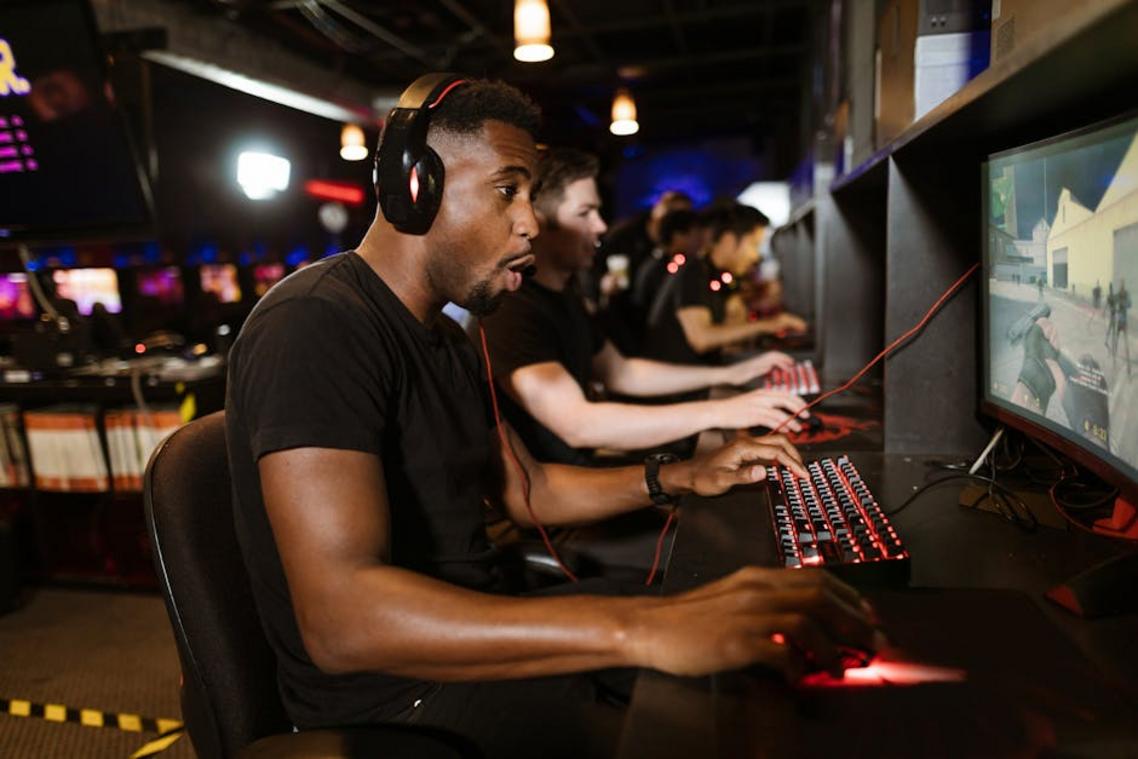
It’s All in the Wrists (and Fingers)
First, let’s define a micro-moment: a split-second mechanical decision that determines whether a play becomes a whiff—or a clip replayed for years. Optimized sensitivity settings, dead zones, and DPI (dots per inch, the measure of mouse sensitivity) directly shape these moments. Lower sensitivity can improve precision; higher sensitivity can enable faster turns. Pros fine-tune this balance to land “flick shots” (rapid, snapping aim adjustments) or execute “animation cancels” (interrupting an animation to act sooner) with ruthless consistency.
Some argue settings don’t matter—that raw talent wins. Yet data from aim-tracking studies shows consistent sensitivity correlates with improved accuracy under pressure (Human-Computer Interaction research, IEEE). Talent sets the ceiling; optimization raises the floor. That gap is where championships live.
Movement as a Weapon
Meanwhile, movement tech like strafe-jumping and wave-dashing turns physics into offense. Strafe-jumping chains directional inputs for speed boosts; wave-dashing exploits momentum to reposition unpredictably. Critics claim flashy movement is style over substance. But unpredictability forces opponents into reactive aim patterns, statistically lowering hit probability (as shown in FPS movement variance analyses). In other words, you’re not just dodging—you’re rewriting the duel’s math (and yes, it looks cool).
Resource Management Under Fire
Finally, consider resource economy: ammo counts, mana pools, cooldown timers. Holding a single ultimate ability for two extra seconds can flip a team fight. This restraint rarely trends in esports gaming highlights, yet it’s the hidden trigger behind them. In our breakdown of weekly gaming highlights breakthrough plays and record breaking scores, the common thread isn’t chaos—it’s conservation. The real spectacle isn’t reaction speed. It’s knowing exactly when not to act.
The Macro Game: Spotting Highlights on the Minimap
Let’s be honest—most viewers only notice the duel. The 1v1 outplay. The flashy combo. The slow-motion replay that floods esports gaming highlights for the next week. But here’s the frustrating part: the real brilliance often happened 20 seconds earlier on the minimap.
Beyond the duel, there’s the rotation that made it possible. Rotation means shifting team members across the map to create a numbers advantage. It’s subtle. It’s quiet. And it wins games. Yet casual spectators rarely credit the support who roamed mid at the perfect moment (even though that’s the move that sealed the “highlight”).
Meanwhile, the art of the pincer—where two forces collapse on a target from different angles—remains criminally underappreciated. A pincer movement is coordinated positioning designed to trap opponents with no escape path. Think less random chaos, more chess match. Sure, the final takedown looks impressive. However, the setup—the vision control, the timing, the communication—that’s elite-level execution. And when teams pull it off flawlessly, it’s like watching Ocean’s Eleven with cooldown timers.
Then there’s objective control. Securing Baron Nashor or a decisive map point through superior warding and lane pressure is a highlight in its own right. Vision control—managing what your team can see versus what the enemy can’t—often determines who wins before a fight even starts. Yet somehow, people still say, “Nothing happened.”
Pro tip: if you want to truly understand high-level play, watch the minimap more than the health bars.
Because in the macro game, the loudest moment isn’t always the smartest one.
From Viewer to Creator: Capturing Your Own Epic Moments
Up to this point, you’ve learned how to dissect greatness. Now, let’s flip the script. The real shift happens when you apply that same analytical lens to your own matches.
Here’s the core insight: the gap between a solid play and a legendary highlight isn’t raw mechanics—it’s intent. Tactical decision-making (the deliberate choices that set up an outcome) is what turns a flashy combo into a match-defining moment. Anyone can land a skill shot. Not everyone rotates early, baits an ultimate, and then capitalizes.
While most breakdowns of esports gaming highlights obsess over reaction time, they rarely unpack positioning discipline or cooldown tracking (knowing exactly when abilities become available again). That’s your edge.
For example, think of a perfectly timed flank in a multiplayer arena. It’s less “button mashing,” more chess move. Queen to E5.
Next time you queue up, watch for micro-rotations and resource trades. Then clip the moment strategy and execution align.
Pro tip: Review your losses, not just your wins—that’s where legendary instincts are forged.
Dominate the Arena With Smarter Strategy
You came here to sharpen your edge—and now you understand the mechanics, tactics, and adjustments that separate casual players from true competitors. From mastering shock-level combat systems to refining controller optimization, you’ve seen how small improvements create massive in-game impact.
The real frustration isn’t losing—it’s knowing you could have played better. Missed rotations, delayed reactions, and inefficient builds cost matches. But with the right breakdown of core mechanics, smarter multiplayer arena tactics, and timely esports gaming highlights, you’re no longer guessing—you’re executing with purpose.
Now it’s time to put this into action. Start applying these combat adjustments in your next session. Review your gameplay. Optimize your setup. Study current meta shifts and arena strategies consistently.
If you’re serious about climbing ranks and dominating your competition, don’t leave your growth to chance. Get the latest tactical breakdowns, proven controller optimization tips, and high-impact esports gaming highlights trusted by competitive players. Level up your strategy today and turn every match into a statement win.