
Stunning visuals might grab your attention, but they’re never the reason a game stays with you. If you’ve ever put down a title because it felt “off” or frustrating—without knowing exactly why—you’ve already encountered the hidden foundations that separate great games from forgettable ones. This guide breaks down the essential building blocks behind every memorable experience, from the core loop to feedback systems and core game mechanics. After analyzing hundreds of shock-level combat systems and multiplayer arenas, we’ve distilled what truly works. You’ll walk away with a sharper eye for what makes a game click—and what makes it crumble.
The Core Loop: The Heartbeat of Play
The first time I lost an entire weekend to a dungeon crawler, I didn’t realize why I couldn’t stop. It wasn’t the graphics. It wasn’t the story. It was the loop.
The core gameplay loop is the primary set of actions a player repeats again and again. Think of it as the game’s heartbeat—the rhythm that keeps you engaged. In an ARPG, it’s often Explore > Fight > Loot. In a shooter: Move > Aim > Shoot. Strategy games thrive on Build > Research > Conquer. Roguelikes? Run > Die > Learn > Repeat (and somehow smile while doing it).
At its best, this loop taps directly into our brain’s reward system. According to research on habit formation and dopamine response (Stanford Behavioral Neuroscience), predictable action-reward cycles reinforce behavior. Translation: “just one more match” isn’t an accident.
But here’s the counterpoint: some argue story or graphics matter more. I’ve felt that too. I once bought a stunning sci‑fi title that looked like a blockbuster film. Yet the combat felt sluggish. The rewards were dull. I quit in three days.
A broken loop—tedious actions, weak feedback, poor pacing—undermines even brilliant core game mechanics.
Pro tip: If you can describe the loop in one clear sentence, you probably understand why the game works.
Mechanics and Systems: The Unseen Rules of Engagement
At first glance, mechanics and systems seem interchangeable. They’re not. A mechanic is a single action—jumping, reloading, parrying. A system is the network those actions plug into. Think of it this way: a mechanic is a piano key; a system is the entire song.
Mechanics vs. Systems
For example, a “slide” mechanic lets you lower your hitbox and move quickly. A “shooting” mechanic lets you fire accurately. Separately, they’re simple. Together, however, they form an aggressive repositioning system—slide into cover while firing, break aim assist, force opponents to track vertically. One input plus another becomes a tactic (and sometimes a highlight reel moment).
Some argue mechanics matter more than systems—just master aim and reflexes. Others insist systems dominate—map control and economy win matches. The truth sits between them. Strong core game mechanics without systemic awareness create flashy but inconsistent players. Deep system knowledge without mechanical execution? That’s theory without impact.
Systemic harmony is what separates good games from frustrating ones. A stealth system must align with AI sightlines and level design. If enemies ignore shadows, stealth collapses.
Ultimately, mastering multiplayer arenas means shifting from “What button do I press?” to “How do these rules interact?” For deeper breakdowns, see this tactical guide.
Player Agency: Why Your Choices Must Matter
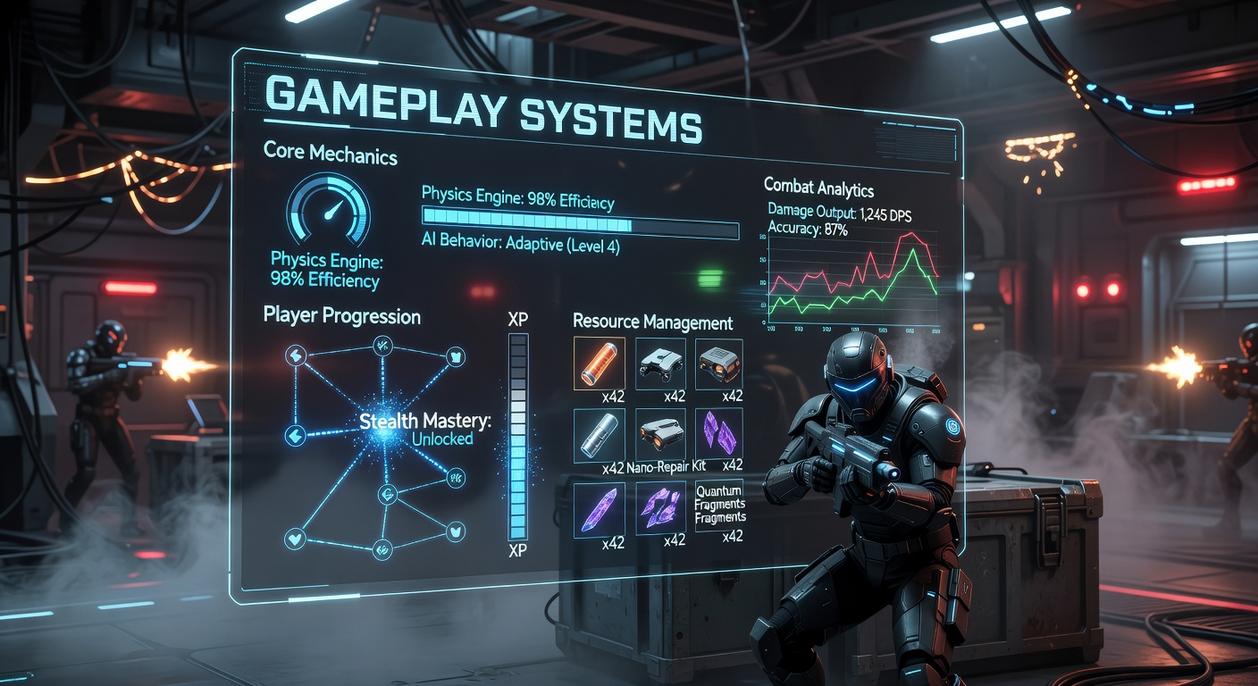
Player agency means the player feels their decisions create REAL, NOTICEABLE consequences in a game’s world, story, or character growth. If you choose a faction, save a character, or spend skill points a certain way, something should change. Otherwise, the choice is cosmetic (and players can tell).
Think of agency as a spectrum. High-agency games—like branching RPGs or sandbox builders—let you shape outcomes in big ways. Low-agency games—like on-rails shooters—guide you through a tight, scripted path. Neither is bad. The problem happens when EXPECTATION and reality don’t match.
Agency also works at two levels. Macro agency is the big stuff: which faction you join. Micro agency is moment-to-moment: when you dodge, heal, or counter in a boss fight. Even small decisions reinforce control.
When core game mechanics consistently respond to player input, agency feels authentic. For deeper breakdowns, explore advanced strategy frameworks for skill based games.
Game Feel: The Art of Satisfying Feedback
What is “juiciness”? In simple terms, it’s the tactile, responsive, and impactful feedback a game delivers when you press a button. When I tap jump, I want an immediate leap—not a polite suggestion. That tight loop between action and response is game feel, and in my opinion, it’s the difference between a good game and one you replay for years.
The Sensory Cocktail
Great feedback blends multiple ingredients:
| Element | Why It Matters |
|---|---|
| Responsive controls | Instant input, no hesitation |
| Sound design | The “thump” sells weight |
| Visual effects | Sparks, shake, impact flashes |
| Haptics | Vibration reinforces force |
Think of it like landing a combo in Street Fighter—without punchy audio and screen shake, it feels flat.
That said, some argue flashy effects mask shallow core game mechanics. I disagree. Polish doesn’t replace depth, but it amplifies it.
Most importantly, controller optimization and low input lag are foundational. Even a 100ms delay (perceptible to players, per NVIDIA latency research) can sabotage immersion. Pro tip: test sensitivity and dead zones first—feel starts at your thumbs.
Risk and reward drive momentum in games. At its heart, risk/reward balance means players accept danger for a shot at something better. Think of a heavy attack with a long wind-up animation: you’re exposed, but the damage payoff can swing a fight. Or consider a shortcut through a packed enemy corridor, where speed trades safety. Likewise, a brutal optional boss guarding rare loot tempts bold players.
However, when safe tactics outperform daring ones, tension evaporates. Conversely, if risky plays feel pointless, frustration sets in. My recommendation: tune core game mechanics so bold choices clearly outshine passive ones—without guaranteeing success consistently.
Decoding the DNA of Great Games
You set out to understand what truly makes great games unforgettable—and now you have the blueprint. By recognizing the loop, mechanics, agency, feedback, and risk/reward, you can move beyond surface-level impressions and pinpoint why a game clicks or falls flat. That frustrating, vague sense that something feels “off” no longer has to be a mystery.
Next time you pick up a controller, break the experience down. Analyze the systems. Test the balance. See how each pillar interacts. And if you want deeper breakdowns, elite-level combat insights, and controller optimization tips trusted by competitive players, dive into our expert guides now and start mastering every game you play.