

There’s nothing quite like the rush of a perfectly balanced fight—the split-second dodge, the last-hit victory, the sense that you won because you played smarter. But we’ve all felt the opposite too: a battle that feels cheap, unfair, or downright impossible. That razor-thin line between thrilling and frustrating is where great design lives. The real challenge lies in combat difficulty balancing—crafting encounters that test skill without punishing players unfairly. Drawing on deep analysis of shock-level combat systems and competitive multiplayer arenas, this article breaks down the core mechanics that make combat fair, engaging, and unforgettable.
Core Mechanics of Challenge: What Makes a Fight “Fair”?
Fairness in game design isn’t about equal health bars. It’s about perceived justice—the sense that when you lose, it was your mistake, not the game’s. That distinction builds trust, and trust keeps players engaged.
First, telegraphing attacks matters. Telegraphing means clear visual or audio cues that signal incoming danger. A glowing weapon, a distinct wind-up animation, or a sharp audio sting gives players time to react instead of guess. The benefit? Losses feel educational, not random (think Dark Souls boss wind-ups rather than a jump scare from nowhere).
Equally important are consistent rule sets. If gravity affects the player, it should affect enemies too—mostly. Shared physics and readable patterns improve learnability, which strengthens combat difficulty balancing and long-term mastery.
To avoid “cheap shots,” designers should minimize:
- Off-screen attacks
- Un-signaled instant-kill mechanics
- Excessive crowd control or stunlocks
These break agency—the player’s sense of control—and erode satisfaction.
Finally, the feedback loop ties everything together. Clear hit indicators, readable damage numbers, and impactful sound design confirm cause and effect. When players understand why something happened, they improve faster.
For a broader context, explore the evolution of real time combat mechanics.
Ultimately, fair fights create confident players—and confident players keep playing.
Dynamic Difficulty: Adapting the Challenge in Real-Time
For decades, games relied on static modes like Easy, Normal, and Hard. Dynamic Difficulty Adjustment (DDA) flips that script. Instead of locking you into a preset, DDA quietly tweaks the experience in real time based on your performance. The benefit? A challenge that evolves with you—keeping tension high without tipping into frustration.
At its best, DDA is invisible. Subtle adjustments—like slightly lowering enemy accuracy, adjusting resource drop rates, or fine-tuning aggression—help smooth difficulty spikes without announcing themselves. Resident Evil 4 famously used a hidden system that scaled enemy behavior depending on player success, maintaining suspense without breaking immersion (Capcom development interviews, 2005). Players felt tested, not manipulated.
By contrast, obvious shifts can backfire. If enemies suddenly become bullet sponges after a win streak, or the game showers you with health after every mistake, it undermines skill expression. This is where the dreaded “rubber band” effect appears—making players feel punished for success or patronized for failure (like a racing game that won’t let you pull ahead).
So what’s in it for you when DDA works properly?
- Consistent tension without brutal difficulty spikes
- Improved skill growth through adaptive pressure
- Greater immersion thanks to seamless tuning
- Stronger combat difficulty balancing that respects player effort
That said, some players argue DDA removes fairness. They prefer fixed systems where mastery is measurable. A valid point. However, optional modifiers—like Halo’s Skulls or covenant-style challenge toggles—offer the best of both worlds. You gain agency, transparency, and control.
Ultimately, smart DDA doesn’t erase challenge—it refines it, ensuring every victory feels earned (and every defeat instructive).
The Psychology of the Spike: Mastering “Shock-Level” Encounters”
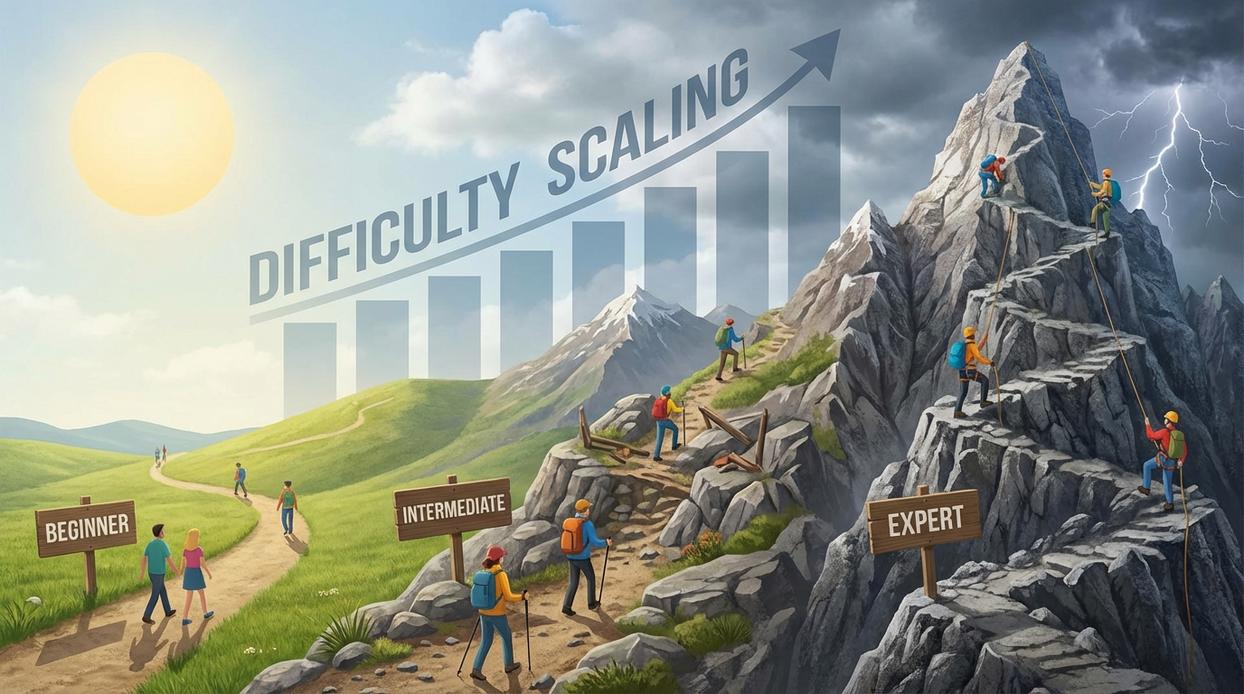
Have you ever wondered why a sudden boss fight can make your heart race before you even press a button? That sharp spike in difficulty isn’t random—it’s a TEST. A well-designed shock-level encounter examines whether you’ve truly mastered the mechanics the game has been quietly teaching you.
Think about it: were you actually learning, or just surviving?
The Boss Fight Formula
A great boss fight usually includes:
- Recognizable patterns you can learn (attack rhythms, movement tells)
- Exploitable weak points that reward observation
- Distinct combat phases that escalate tension
This structure supports effective combat difficulty balancing. The challenge feels overwhelming at first—but not unfair. When you fail, you know why. And when you win, it feels earned (finally, sweet victory).
But what prepares you for that moment? Level design narrows your path. Music shifts in tone. The lighting changes. NPC dialogue grows ominous. Sound familiar? That anxiety you feel is intentional—it’s anticipation being engineered.
And here’s the real question: would the struggle matter without the reward?
A true difficulty spike must pay off. Powerful loot. A transformative ability. Major story progression. Without meaningful payoff, frustration replaces fulfillment. With it, the spike becomes memorable—the kind players talk about for years (yes, we’re looking at you, legendary final bosses).
The Arena vs. The Campaign: Balancing for PvP and PvE
Balancing a campaign against AI isn’t the same as tuning an arena full of real players. Bots follow patterns. Humans improvise, exploit, and occasionally break the meta by Tuesday afternoon.
Time-to-Kill (TTK)—the average time it takes to eliminate an opponent—defines multiplayer pacing. A low TTK rewards twitch reflexes; a higher TTK emphasizes positioning and teamwork. Think Call of Duty versus Apex Legends. One punishes hesitation instantly; the other gives space for counterplay (and dramatic last-second revives).
Skill gaps complicate things further. Designers want:
- New players to contribute meaningfully
- Veterans to master advanced mechanics
That balance fuels long-term engagement and shapes combat difficulty balancing across modes.
Then there’s Skill-Based Matchmaking (SBMM). Controversial? Absolutely. Essential? Increasingly yes. Without it, newcomers churn out fast.
Speculation: future arenas may rely more on dynamic SBMM and adaptive TTK tuning in real time, subtly adjusting matches behind the scenes to keep competition tight and fair.
To truly master the art of balancing difficulty in fast-paced combat games, players can benefit from the precision of tools like the Tgarchiveconsole Upgrade, which allows for fine-tuning gameplay mechanics to enhance the overall experience.
Crafting a Rewarding and Memorable Challenge
At its core, great game design is about achieving flow—where challenge meets player skill in perfect balance. You came here to understand how to walk the razor-thin line between frustrating and boring, and now you see that combat difficulty balancing is the key. When combat feels unfair, players disengage. When it feels trivial, they lose interest. The solution is treating combat like a conversation—clear rules, consistent feedback, and respect for player effort.
If your encounters aren’t landing, it’s time to refine your balance. Test smarter, tune intentionally, and build battles players remember. Master this, and you’ll create experiences that keep them coming back for more.