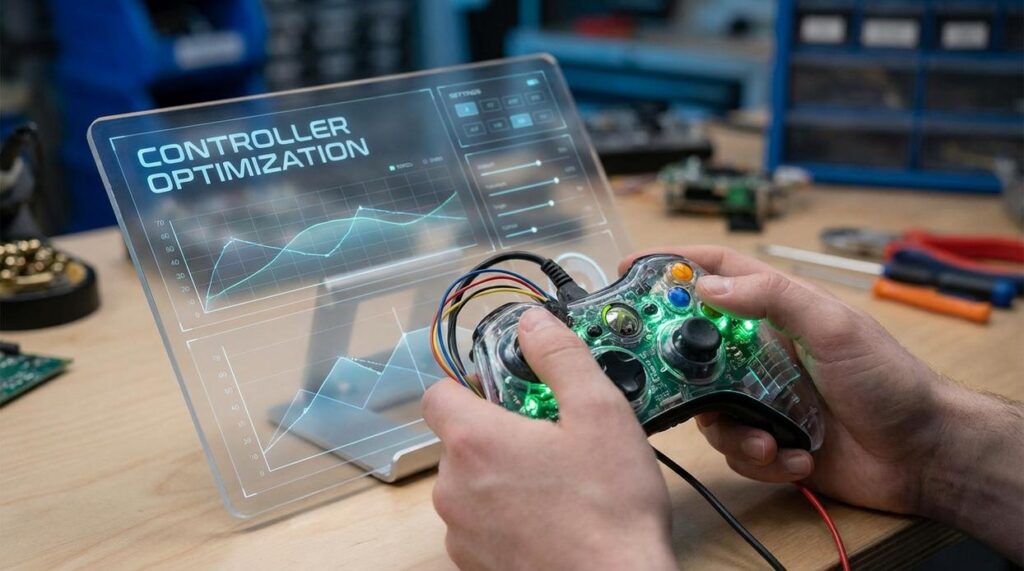
If you’re here, you’re looking to sharpen your edge—whether that means mastering core mechanics, dominating competitive matches, or understanding the shock-level combat systems that separate casual players from true contenders. This article is built to give you exactly that: clear, actionable insights into today’s hottest gaming highlights, deeper mechanical breakdowns, and practical strategies you can apply immediately.
We focus on what actually impacts performance—precision controller optimization, advanced movement control, damage timing, and multiplayer arena team tactics that turn chaotic fights into coordinated wins. Every recommendation is grounded in hands-on testing, competitive analysis, and close study of evolving gameplay metas.
By the end, you’ll not only understand how these systems work—you’ll know how to use them to outplay opponents, support your squad more effectively, and elevate your overall performance in high-pressure arena environments.
Beyond the Respawn Screen: A Blueprint for Team Dominance
Raw aim is a sword; strategy is the GENERAL who decides where it swings. Winning in multiplayer arena team tactics isn’t chaos—it’s choreography. Think of your squad like a basketball lineup: spacing, timing, and callouts create open shots. Without structure, you’re five soloists playing different songs.
Some argue mechanics alone carry games. Sure, a superstar can drop 40 points. But championships? They’re built on SYSTEMS.
| Element | Purpose | Result |
|—|—|—|
| Communication | Shared info | Faster rotations |
| Positioning | Map control | Objective pressure |
| Execution | Timed abilities | Clean wipes |
Treat every push like a heist—roles clear, exits planned (no one wants a messy getaway).
The Unbreakable Trinity: Role Specialization and Team Synergy
First, let’s define the trinity. Tank absorbs pressure and creates space (drawing enemy focus so others can act freely). Damage (DPS) converts that space into eliminations. Support sustains momentum through healing, buffs, or crowd control. In modern multiplayer arena team tactics, these roles aren’t rigid job titles—they’re opportunity engines. A Tank who displaces enemies isn’t “just defending”; they’re setting the stage for a Damage spike. A Support who times a cleanse perfectly turns a near-loss into a counterpush.
Some argue rigid roles limit creativity. Fair. Hybrid builds and flex comps can work. However, even hybrids fulfill one of these core functions at critical moments. Ignore that, and synergy collapses (like assembling the Avengers but forgetting who’s actually tanking Thanos).
Next, synergistic picks outperform solo “meta” choices. For example, pair a hero who slows enemies (crowd control reduces movement speed) with an area-of-effect burst specialist. The slow guarantees impact. Likewise, a shield-centric Tank plus a damage-boosting Support amplifies sustained poke comps. Pro tip: draft combos, not characters.
Finally, counter-picking with purpose means identifying the opponent’s win condition. Heavy dive comp? Choose peel-focused Support and displacement Tanks. High sustain enemy? Add anti-heal. This proactive drafting creates structural advantage before the first engagement even begins.
Mastering Shock-Level Combat: How to Win Fights Before They Start
Shock-level combat is about ending a fight before the enemy understands what’s happening. In simple terms, you create such a fast, coordinated burst of pressure that the battle is effectively decided in the first few seconds.
1. The Alpha Strike
An Alpha Strike means executing focus fire—when your entire team targets one enemy at the same time. Instead of spreading damage, you stack it. If five players each deal 20% damage to one target, that hero is gone instantly (numbers beat chaos).
Just as important is coordinated ability usage. For example, your tank initiates with a stun, your damage dealers layer burst abilities, and your support amplifies damage. That tight timing creates a 5v4 advantage immediately. Some argue spreading damage builds pressure across the team. However, pressure doesn’t win fights—eliminations do.
2. Creating Chaos
Next comes shock tactics: flanks, crowd control chains, and ultimate combos. A flank forces enemies to turn. A stun into a knock-up into an ultimate prevents counterplay. They can’t execute their strategy if they’re disoriented.
This is where multiplayer arena team tactics shine. Controlled chaos disrupts positioning and splits communication (think of it like pulling the fire alarm mid-meeting).
3. Baiting and Punishing
Finally, baiting. One teammate overextends slightly, drawing out key ultimates. The callout might be: “Shield down—ult used—go now!” Once enemy cooldowns (ability recharge timers) are burned, your team commits hard.
If you combine this with strong map awareness from map control strategies that dominate objective based modes, you’ll force fights on your terms.
Win the first five seconds—and the rest usually follows.
The Controller Edge: Optimizing Your Inputs for Millisecond Reactions
I used to blame lag for every missed shot. Then one night, after losing three ranked matches in a row, I tweaked my sensitivity from default to custom—and suddenly my aim felt glued to targets. That was the moment I realized factory settings are built for everyone, not for you.
By default, controllers ship with moderate look sensitivity, standard acceleration curves (how fast your aim speeds up as you push the stick), and safe deadzones—the small area where stick movement doesn’t register. Lowering deadzones tightened my micro-adjustments, while a linear acceleration curve made tracking enemies smoother. Some players argue defaults are “balanced.” Sure, but balanced isn’t optimized (and milliseconds decide fights).
Next, I remapped my layout. Keeping my thumbs on the sticks while jumping or activating abilities changed everything. Layouts like “Bumper Jumper” or rear paddles let you react without sacrificing aim. In fast multiplayer arena team tactics, that split-second continuity matters.
Hardware helps, too. A wired connection reduces input delay (the gap between pressing a button and seeing action), and high refresh-rate monitors display frames faster (NVIDIA confirms higher refresh improves perceived responsiveness). Pro-style controllers offer adjustable triggers and paddles—small tweaks, big edge.
It’s not flashy. But neither was upgrading from dial-up—until you felt the speed.
Winning the Map: The Art of Rotations and Objective Control
Map Awareness as a Weapon
Think of the map as a living chessboard. Every corridor echoes with footsteps, every high ground ledge hums with danger. When you control sightlines and choke points, you can almost feel the pressure shift—like tightening a vice. Some argue raw mechanical skill wins fights. Sure, sharp aim matters. But even the flashiest player falters when funneled through a narrow doorway under crossfire (it’s like sprinting into a spotlight). Mastering multiplayer arena team tactics starts with terrain control.
- Hold high ground to force awkward enemy angles
- Lock choke points to dictate engagement pace
- Deny vision to make opponents hesitate
Rotational Timing
Rotate before the objective spawns. The early footsteps, the clink of reloading—those sounds signal preparedness. Critics say reacting is safer. Yet proactive movement secures defensive setups and calmer sight pictures.
Resource Management
Track cooldowns, ultimate charge, and special ammo. A synchronized push should feel thunderous, not desperate. Pro tip: save burst abilities for objective clashes, not random duels.
From Strategy to Instinct: Your Path to the Winner’s Circle
You now have the framework that separates elite squads from average players. However, knowledge alone isn’t enough.
Consider this comparison:
- Random Play: Teammates chase kills, overlap roles, and react late.
- Coordinated Play: Clear roles, timed pushes, and a decisive Alpha Strike.
In Scenario A, you’re scrambling. In Scenario B, you dictate tempo (and suddenly the chaos feels choreographed).
By applying multiplayer arena team tactics, shock-level combat principles, and optimized controls, you move from reaction to control. So, in your next match, commit to one tactic—execute an Alpha Strike—and measure momentum.
Dominate the Arena With Smarter Strategy
You came here to sharpen your edge in high-intensity matches—and now you understand how hot gaming highlights, core mechanics, shock-level combat systems, and multiplayer arena team tactics all connect to real performance gains.
The difference between frustrating losses and consistent wins often comes down to one thing: execution under pressure. Missed rotations, unoptimized controller settings, and poorly timed abilities are the pain points holding most players back. When your mechanics and tactics aren’t aligned, every match feels harder than it should.
Now you know better. Tighten your controller optimization, refine your combat timing, and coordinate smarter with your squad. That’s how you turn chaotic fights into controlled victories.
If you’re serious about climbing ranks and outplaying tougher opponents, don’t stop here. Dive deeper into advanced arena breakdowns, apply these strategies in your next matches, and keep refining your system. Join thousands of competitive players who rely on our proven tactical insights—then queue up and put this knowledge to work today.