Competitive gaming evolves at a relentless pace, and staying ahead means more than just logging hours—it requires understanding the mechanics, metas, and tactical shifts shaping today’s arenas. If you’re searching for sharper multiplayer strategies, deeper insight into shock-level combat systems, or smarter controller optimization tips, this article delivers exactly that. We break down the hottest gaming highlights, dissect core mechanics that separate casual players from ranked contenders, and analyze the tactical adjustments defining high-level play right now.
Our insights are grounded in hands-on testing, frame-by-frame combat breakdowns, and close study of competitive match data across leading multiplayer titles. Instead of surface-level commentary, you’ll get practical takeaways you can apply immediately—whether that’s tightening your arena rotations, optimizing loadouts, or mastering advanced movement tech.
If your goal is to compete smarter, react faster, and dominate more consistently, you’re in the right place.
Beyond the Titans: Identifying the Next Wave of Competitive Esports
Valorant and League of Legends still dominate the arena—but what’s next? As someone obsessed with high-skill ceilings, I think the real excitement lies in new competitive game releases that prioritize tight mechanics and spectator clarity (because chaos isn’t strategy). After analyzing combat loops and balance models, a few standouts emerge.
| Game | Competitive Edge | Esports Potential |
|——|——————|——————|
| Project Nova | Precision gunplay | High skill cap |
| Riftbreak Arena | Ability synergy | Team meta depth |
Some argue the market’s oversaturated. Fair—but polished systems, like those highlighted on Marshock 200, prove innovation still wins crowds.
Project Aether: The Tactical Shooter Evolved
Project Aether is a 5v5 tactical shooter built on a simple idea: precise gunplay should matter just as much as abilities. In other words, landing your shots wins rounds—but mastering “shock-level” combat systems can instantly reshape the battlefield. By shock-level, we mean high-impact abilities that physically alter the map, not just damage enemies.
At the center of this design is the Resonance system. Resonance occurs when two or more abilities interact to trigger a larger environmental effect. For example, a seismic charge paired with a gravity well might collapse a balcony, cutting off a sniper’s sightline. This isn’t just visual flair; it changes player positioning in real time. Unlike competitors where abilities mostly apply status effects, Resonance creates tangible map alterations. Think less “temporary debuff” and more “the floor is literally gone.”
Meanwhile, map design leans heavily into verticality and destructible choke points. Verticality simply means multiple height levels—rooftops, underpasses, suspended walkways—encouraging layered tactics. Destructible choke points, by contrast, prevent teams from camping narrow corridors all match. If a hallway becomes a death trap, coordinated Resonance can blow it open (a bit like turning a chessboard into Jenga mid-game).
As for competitive viability, the high skill ceiling is clear. Skill ceiling refers to how much mastery the game allows over time. Because abilities require timing and synergy, top-tier teams will outthink—not just outshoot—their opponents. Importantly, visual clarity keeps matches readable for spectators, a crucial factor in new competitive game releases. In short, it’s chaotic—but controlled chaos.
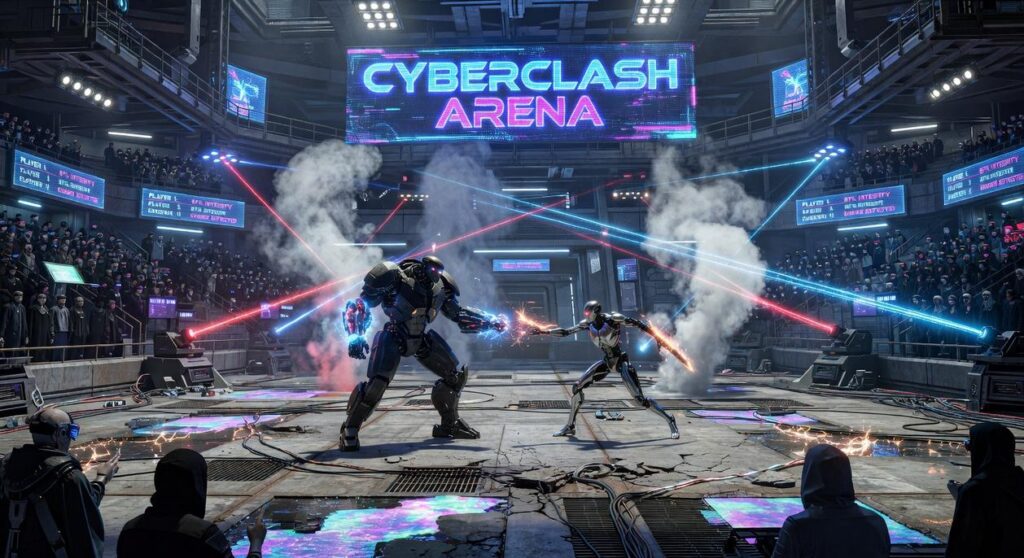
CyberClash Arena: A Fresh Take on MOBA Strategy

Let’s be honest—traditional MOBAs can feel like signing up for a 45-minute commitment you didn’t fully consent to. CyberClash Arena flips that script. Matches clock in at a tight 15 minutes, and instead of a static item shop, you get mid-match Augments—real-time character upgrades that reshape your strategy on the fly.
Here’s why that matters. In most MOBAs, you pre-plan a “build” and hope it holds up. In CyberClash Arena, Augments appear dynamically, forcing you to adapt to the enemy’s composition. Facing heavy crowd control? Slot into a resistance-based Augment. Enemy team stacking burst damage? Pivot to reactive shielding. It’s less chess opening, more speed chess (and yes, sometimes it feels like you’re in a high-stakes anime tournament arc).
Some players might argue this reduces strategic depth. I disagree. If anything, it demands sharper awareness. You’re not memorizing shop paths—you’re reading the battlefield in real time. That’s skill expression.
Meanwhile, the compact, multi-objective maps eliminate passive laning. Objectives spawn frequently, pulling teams into constant skirmishes. There’s no hiding under tower for 20 minutes. If you’re not rotating, you’re losing. It rewards proactive squads and punishes hesitation.
What surprised me most, though, is the controller optimization. The twin-stick aiming feels natural, almost shooter-like, opening the door to console players often excluded from new competitive game releases. That broader accessibility? A smart move.
Pro tip: save one mobility Augment choice for late-game pivots—it often decides the final objective fight.
In my view, CyberClash Arena isn’t simplifying MOBAs. It’s refining them.
Velocity Rush: High-Octane Combat Racing
Velocity Rush isn’t just another futuristic racer—it’s what happens when F-Zero’s blistering speed collides with tactical vehicular warfare. However, unlike arcade-style kart titles, every millisecond here is earned. No rubber banding. No RNG power-ups. Just you, your machine, and the consequences of your decisions.
The Energy Core System (The Real Battleground)
At the heart of the chaos is the Energy Core—a finite, regenerating resource that powers boosts, shields, and heavy weapons. In other words, speed, survival, and aggression all pull from the same pool. Burn energy for a last-second overtake? You’re exposed. Turtle behind shields? You sacrifice track position.
This creates a true risk/reward loop—a gameplay cycle where short-term gains can sabotage long-term survival. Think of it like managing stamina in a Soulslike (panic-spam and you’re done). Pro tip: feather boosts out of corners instead of holding them—micro-bursts preserve energy while maintaining exit velocity.
Skill Gap by Design
Meanwhile, track memorization and precision drifting amplify the ceiling. Optimal racing lines, energy timing, and controller input consistency separate contenders from spectators—exactly why it belongs beside new competitive game releases dominating esports circuits.
If you’ve seen the viral gameplay clips that redefined skill ceilings, you know mastery is mechanical, not luck-based.
Some argue pure-skill racers are less “accessible.” Fair. But accessibility shouldn’t mean randomness. Here, victory is measurable, repeatable, and brutally honest.
Key Trends Shaping the 2024 Competitive Landscape
I used to design around endless progression loops. Big mistake. Players bounced.
Trend 1: Anti-Bloat Design. Shorter matches and tighter mechanics respect time. Think fight, reset, queue again (no three-hour sagas).
Trend 2: Skill Over Grind. Systems where hours equal power are fading. Mechanical mastery—not XP bars—wins. I once over-tuned rewards; smurfs farmed newcomers. Lesson learned.
Trend 3: Spectator-First Features.
• Built-in replay editors
• Clear visual language in combat
new competitive game releases prove it: clarity fuels esports. Like Rocket League taught us, readable chaos beats clutter. Players notice the difference immediately. Trust me.
Choosing Your Grind: Which New Esport Is Right for You?
Now that we’ve explored the most promising titles poised to shake up the competitive scene, the real challenge begins: choosing where to invest your time. With practice hours often exceeding 500+ before reaching tournament readiness (Newzoo, 2024), this isn’t a casual commitment.
If you thrive on precision and split-second calls, tactical shooters reward discipline. Prefer layered decision-making? Strategic MOBAs demand macro thinking and teamwork. Crave adrenaline? High-speed racers test reflexes under pressure.
While some argue you should wait for stability, early adopters of new competitive game releases often gain a lasting skill advantage. So pick your lane—and start grinding.
Stay Ahead of the Meta Before It Leaves You Behind
You came here to sharpen your edge—understanding hot gaming highlights, mastering core mechanics, refining multiplayer arena tactics, and pushing your shock-level combat systems to their limits. Now you have the insight to compete smarter, react faster, and optimize every controller input for peak performance.
But the real challenge isn’t learning once—it’s keeping up. The meta shifts. Balance patches hit. new competitive game releases reset the skill ceiling overnight. If you’re not adapting, you’re falling behind—and in competitive play, hesitation costs wins.
The solution is simple: stay informed, stay optimized, and stay practicing with purpose. Break down your gameplay, refine your loadouts, and apply advanced tactics consistently until they’re second nature.
If you’re serious about climbing ranks and dominating your lobbies, don’t stop here. Join the #1 rated source for competitive gaming insights and get battle-tested strategies delivered straight to you. Level up your skills now and turn every match into a statement win.