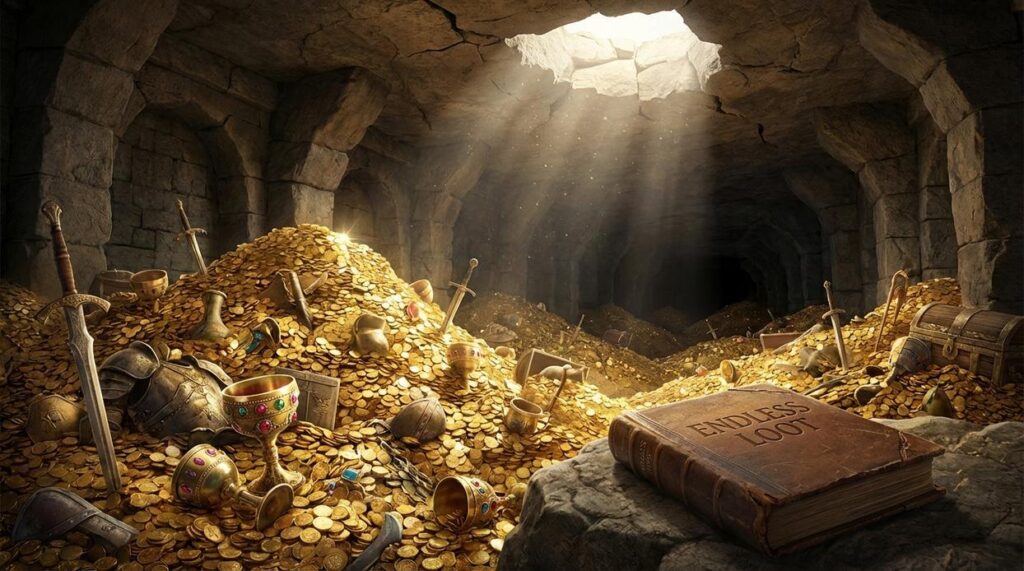
You know the feeling—the split second before you commit to an all-in push, or the breath you hold while waiting for a rare drop to flash across your screen. That surge of tension and possibility is no accident. Many players crave it but struggle to explain why it’s so powerful. This deep dive explores the psychology and design behind risk reward gameplay, unpacking how uncertainty, timing, and massive payoffs shape unforgettable moments. By the end, you’ll recognize the mechanics driving your favorite loops—and spot the games that truly master high-stakes balance.
The Core Loop of Risk and Reward: How Games Keep You Hooked
At the heart of great games is intermittent reinforcement—a psychological principle where rewards arrive unpredictably. Unlike fixed rewards (think a steady paycheck), variable rewards keep the brain guessing. B.F. Skinner’s behavioral research showed that unpredictable rewards drive repeated behavior more effectively than guaranteed ones (Skinner, 1953). It’s why opening a rare loot chest feels electric while collecting routine coins feels… fine. The uncertainty is the hook.
However, randomness alone isn’t enough. Players need agency—the sense that their choices matter. When you decide to challenge a high-level boss with low health, you’re embracing meaningful risk. Failure is possible. That tension makes victory feel earned. Some critics argue this design manipulates players, but that overlooks the empowerment factor: choosing the risk transforms anxiety into accomplishment.
Here’s how the loop works in practice. First, you assess danger. Next, you invest resources—time, ammo, positioning. Finally, you receive a variable reward: rare loot, experience points, or map control. This cycle defines risk reward gameplay and keeps engagement high.
Interestingly, mastering your controller reduces execution risk (missed shots, mistimed dodges). As mechanical errors drop, you shift focus to strategic gambles instead of fumbling inputs. Pro tip: refine sensitivity settings early so mechanical friction never limits bold decisions.
Roguelikes & Roguelites – The Ultimate Test
Roguelikes and roguelites are built on two deceptively simple pillars: procedural generation and permadeath. Procedural generation means levels, enemies, and rewards are algorithmically shuffled each run—no two dungeon crawls are identical. Permadeath means when you lose, you lose. Full stop. (Yes, even if you were “so close.”)
Games like Hades and Slay the Spire turn every attempt into a high-stakes gamble. You don’t know the room layout. You don’t know which relic will drop. You don’t even know if the next doorway hides treasure or a monster ready to humble you.
Some critics argue randomness cheapens skill. If luck determines your items, where’s the mastery? Fair question. But the counterpoint is this: top players consistently win because they adapt. Uncertainty doesn’t erase skill—it tests flexibility.
The real reward isn’t just better loot. It’s:
- Completing a brutal run
- Unlocking permanent upgrades (known as meta-progression, systems that persist between runs)
- Gaining knowledge that makes future attempts smarter
That layered progression turns failure into fuel. (It’s like getting knocked down in a boxing match and coming back with a better strategy—and maybe a cooler weapon.)
Looter Shooters & ARPGs – The Endless Hunt

If roguelikes are about survival, looter shooters and ARPGs are about obsession. Diablo and Borderlands revolve around randomized loot tables—systems that determine what gear drops and how powerful it is.
The uncertainty? Whether the next defeated enemy drops junk… or a “god-roll.” A god-roll is an item with near-perfect stats and ideal modifiers. It’s the gaming equivalent of finding a twenty in your old jeans pocket.
Some say this design is manipulative, comparing it to slot machines. Studies on variable reward schedules suggest unpredictable rewards can heighten engagement (American Psychological Association, 2013). That’s true. But the difference lies in agency. You’re not pulling a lever; you’re optimizing builds, targeting bosses, and refining strategy.
That shock-level excitement when orange or gold loot explodes onto the screen? That’s the payoff for hours of grinding—and careful build planning.
Multiplayer Arenas & Battle Royales – Tactical Gambles
In Apex Legends or VALORANT, uncertainty shifts from loot tables to human opponents. Every engagement is a calculated risk. Push that squad—or rotate? Hold the angle—or reposition?
This is risk reward gameplay distilled to its purest form.
Win the fight and you gain:
- Better gear
- Superior map control
- Momentum (and bragging rights)
Lose it? Back to the lobby. (Time to blame lag.)
Positioning becomes currency. High ground offers vision but exposes you. Rotating early secures safety but sacrifices potential eliminations.
Mastery here mirrors principles found in mastering resource management in competitive titles: every bullet, ability cooldown, and second of hesitation matters.
Uncertainty isn’t chaos—it’s pressure. And in these genres, pressure is the point.
The Razor’s Edge: Balancing Thrills with Frustration
Have you ever wondered why some random moments in games feel electrifying, while others make you want to toss the controller across the room? That tension lives on a razor’s edge.
Good RNG (random number generation, the system that determines chance-based outcomes) creates excitement. A surprise enemy ambush or a rare loot drop can make victory feel dynamic and alive. It’s the heartbeat of risk reward gameplay. But when a boss unleashes a one-hit-kill attack that’s randomly un-dodgeable, does that feel thrilling—or just unfair?
Some argue that randomness is randomness—adapt or lose. After all, unpredictability keeps games fresh. But here’s the counterpoint: if players can’t meaningfully respond, it stops being challenge and starts being chaos.
Great design mitigates uncertainty. Think “pity timers,” systems that guarantee rare loot after enough failed attempts (a mercy rule, essentially). Or abilities that ensure a critical hit at the perfect moment. These tools shift probability into the player’s hands.
And isn’t that the real test of skill? In shock-level combat systems, mastery means turning apparent disaster into a calculated win. When mechanics are understood deeply, bad luck becomes manageable—not decisive. Shouldn’t victory feel earned through insight and timing rather than a lucky roll?
At its core, the magic of high-stakes gaming lies in uncertainty colliding with possibility. That tension fuels risk reward gameplay, a loop psychologists link to dopamine spikes comparable to competitive sports finales, according to research from the University of Cambridge. Moreover, games like Overwatch and Apex Legends show that clutch moments drive replay rates and community storytelling. Consequently, players trade tales of last-second saves and legendary loot for years. So, look closely at your favorite titles; identify the mechanics that raise the stakes, then seek new experiences that dare you to risk everything. That’s where legends are truly forged. Forever.
Mastering the Arena Starts Now
You came here to sharpen your edge—understanding hot gaming highlights, mastering core mechanics, and refining your multiplayer arena tactics. Now you have the clarity to approach every match with smarter positioning, tighter controller optimization, and a deeper grasp of risk reward gameplay.
The difference between average players and arena dominators is execution under pressure. Missed inputs, poor timing, and hesitation in shock-level combat systems cost you wins. But when you apply what you’ve learned—calculated aggression, mechanical precision, and strategic awareness—you shift the odds in your favor.
Now it’s your move. Jump back into the arena and put these tactics to work immediately. Focus on one mechanic at a time, refine your controller setup, and track how your decision-making improves round after round.
Thousands of competitive players rely on these proven strategies to climb rankings and outplay tougher opponents. If you’re serious about winning more matches and eliminating costly mistakes, start applying these insights today and turn every battle into a calculated advantage.