
Every great game feels intuitive at first touch—but the real magic lies far beyond the button press. If you’ve ever wondered why some titles offer endless strategic depth while others fade after a few sessions, the answer lives in their underlying systems. This deep dive unpacks the fundamental elements that separate shallow gameplay from truly strategic experiences. Drawing from a structured framework built through the deconstruction of hundreds of critically acclaimed and competitively viable games, we’ll break down the four pillars of core game mechanics strategy—so you can analyze games at a higher level or design more compelling ones yourself.
The Core Loop and the Power of Choice
At its simplest, a core gameplay loop is raw motion and noise: see the enemy, hear the crack of gunfire, duck behind cover, repeat. The rhythm can feel mechanical, like a metronome ticking in a quiet room. Yet in this bare form, it is not strategy; it is choreography.
However, the moment you introduce player agency, the air changes. Suddenly, the battlefield smells of risk. Do you slip through shadows, boots whispering on concrete, or charge headfirst with grenades clanking at your belt? When multiple tools solve the same problem, players begin weighing tradeoffs, not just reacting. That tension is the heartbeat of core game mechanics strategy.
Consider the humble dodge. Pressed thoughtlessly, it is a twitch. Designed with invincibility frames, stamina cost, recovery animation, and cancel windows, it becomes a gamble you can almost feel in your palms as the controller vibrates. Some argue complexity muddies accessibility. Fair. But without constraints, choice loses meaning (and meaning is the whole point).
Finally, optimized controller layouts remove friction. When your fingers glide without searching, timing sharpens, and every dodge becomes deliberate rather than desperate. And the stakes feel vividly real. In every encounter.
Every Action a Gamble: The Art of Risk and Reward
At the heart of great design lies a simple rule: every powerful action must carry meaningful risk. That’s the foundational principle. If a move delivers massive reward with no downside, it stops being strategy and starts being autopilot.
Consider two options side by side:
- Heavy Attack: High damage, long wind-up, leaves you exposed.
- Quick Jab: Low damage, fast recovery, minimal punishment window.
Both are viable—but only because their risks match their rewards.
There are also layers to risk. Explicit risk is obvious: a charged strike that can be interrupted. Implicit risk is subtle: firing a loud weapon that reveals your position on the map (great power, terrible stealth). Players who ignore these hidden costs often learn the hard way.
Take shock-level combat. A perfectly timed parry can stun an enemy and swing momentum instantly. Miss it? You eat critical damage. It’s Street Fighter-level mind games—read your opponent or suffer. That tension forces intention over button-mashing.
Some argue dominant strategies naturally emerge and players will always optimize the “best” move. True—but smart tuning within core game mechanics strategy prevents stagnation. Adjust recovery frames, resource costs, or vulnerability windows, and suddenly defensive players, rushdown fans, and tacticians all have space to thrive.
When risk and reward stay balanced, every choice feels electric (and every mistake memorable).
Winning the War of Attrition: Why Resources Dictate Strategy
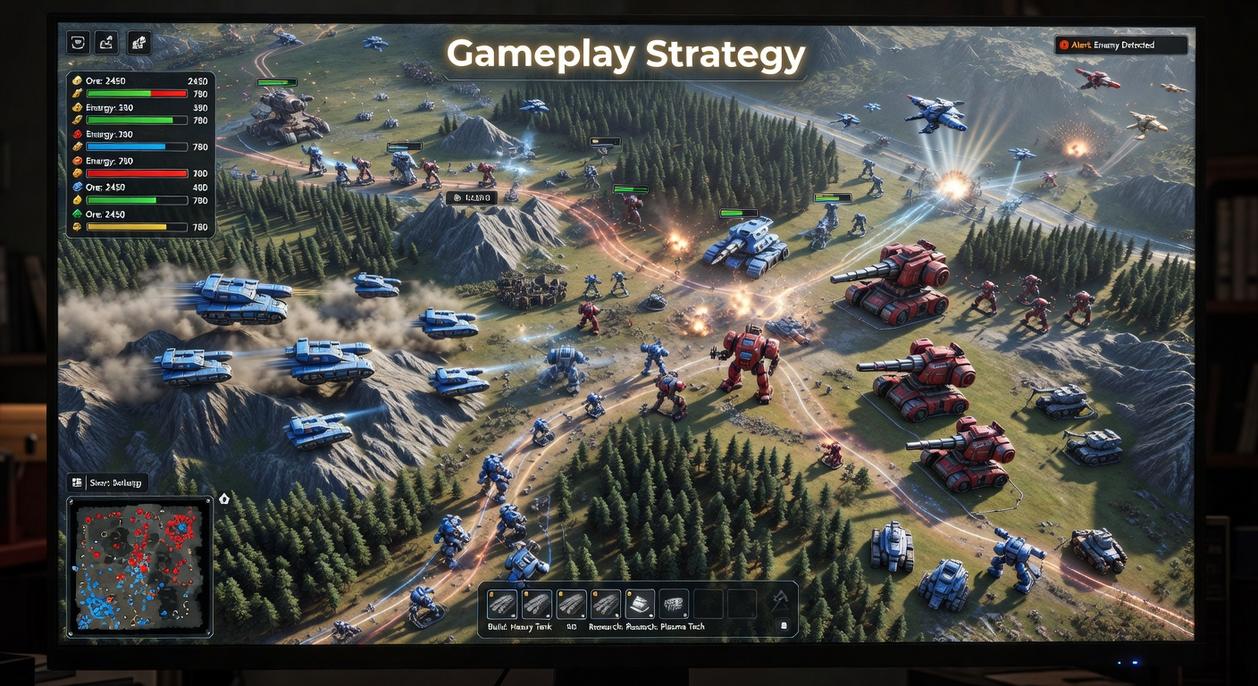
When most players hear the word resource, they think of health bars and ammo counters. However, that definition is far too narrow. In competitive games, a resource is anything limited that affects your decision-making.
For example, time is a resource. A bomb defusal timer in a tactical shooter forces movement and risk. Run out of seconds, and nothing else matters. Likewise, information—such as enemy positions revealed by a UAV—is a temporary advantage you must act on before it expires. Even positioning, like holding high ground, is a resource because it grants leverage that can be lost. Then there are cooldowns, the enforced waiting periods before an ability can be reused. Once triggered, that power is unavailable, and that absence shapes the fight.
Scarcity is what transforms these elements into strategy. If you only have one health pack left, do you use it now or save it for the boss? If an ultimate ability carries a 60-second cooldown, is this skirmish worth the commitment? These trade-offs are the heart of core game mechanics strategy.
In multiplayer arenas, resource tracking becomes even more critical. Teams often win fights before they begin by identifying an opponent’s missing ultimates or key cooldowns. (It’s a bit like noticing your rival brought a water pistol to a rocket fight.) Understanding these timing windows—similar to concepts explored in how frame data analysis improves decision making in fast paced games—clarifies why some engagements feel unwinnable.
Finally, draining resources builds tension. As options disappear, desperation rises. And when you survive with nothing left? That triumph feels earned.
The Strategic Dialogue: Counter-Play and System Interaction
At its heart, counter-play is a conversation. Not with words, but with actions. One player attacks; the other responds. A feint meets a parry. A sniper lines up a shot; a smoke grenade blooms like a cinematic escape scene straight out of Mission: Impossible. This back-and-forth creates what designers call strategic depth—when every move can be answered or nullified by a skillful counter.
Think of it as the “Rock, Paper, Scissors” philosophy leveled up for modern arenas. Balanced systems rely on checks and balances:
- A defensive Block stops a heavy strike.
- A Guard Break shatters that defense.
- A quick Side-Step punishes the overcommitment.
No option reigns forever. (And if it does, the patch notes are coming.)
Systemic interaction pushes this further. When mechanics interact logically with each other and the environment, strategy becomes emergent—meaning unexpected tactics arise naturally from the rules. Water extinguishes fire. Explosive barrels detonate when shot. Smoke blocks line of sight. These aren’t scripted moments; they’re systems colliding. It’s the sandbox magic that makes players feel like they’ve “outplayed” the matrix.
Strong counter-play also highlights skill expression—the visible proof of mastery. The player who anticipates a dodge and delays their strike by half a second isn’t lucky; they’re reading the opponent. Like a fighting game clutch moment that sends Twitch chat into chaos, the right counter at the right time defines competitive brilliance.
Ultimately, great core game mechanics strategy ensures every action invites a response. And in that dialogue, true skill shines.
The Blueprint for Compelling Gameplay
You came here to understand what separates a forgettable mechanic from a truly addictive experience—and now you can see the difference. When simple actions are reinforced by player agency, risk versus reward, resource management, and counter-play, they transform into meaningful decisions. Without these pillars, a mechanic is just movement. With them, it becomes core game mechanics strategy that fuels long-term engagement.
This is why some games stay compelling for thousands of hours: every choice carries weight. Next time you play, break down the risks, resources, and counters in front of you. If you want deeper tactical breakdowns and pro-level insights trusted by competitive players, explore more of our expert guides and sharpen your edge today.