If you’re searching for a clear edge in today’s competitive gaming landscape, you’re in the right place. This article breaks down the latest hot gaming highlights, core mechanics that actually win matches, and the multiplayer arena tactics separating casual players from consistent contenders. We go beyond surface-level tips to examine shock-level combat systems, controller optimization techniques, and the strategic adjustments driving the current meta shift analysis.
Our goal is simple: help you understand what’s working right now—and why. We draw on high-level gameplay data, competitive match breakdowns, and hands-on system testing to ensure every insight is practical, relevant, and immediately usable. Whether you’re refining your mechanics or rethinking your arena strategy, you’ll find focused guidance built around real in-game performance, not theory.
By the end, you’ll have a sharper grasp of emerging trends, smarter tactical adjustments, and the precise optimizations that can elevate your gameplay instantly.
The Developer’s Footprint: Deconstructing Core Stat Metadata
Defining Game Metadata
In competitive gaming, metadata isn’t just patch notes—it’s the raw numerical backbone of a game. Think weapon damage values (e.g., 32 base body shot), ability cooldowns (8.5 seconds), recoil patterns, armor mitigation percentages, or movement speed (5.4 m/s). These numbers quietly determine outcomes long before player skill enters the equation. For example, a 2023 balance review of popular FPS titles showed that weapons with sub-300ms time-to-kill dominated pick rates above 60% in ranked ladders (developer patch data). Numbers drive behavior.
Tracking the Small Tweaks
However, balance rarely shifts through dramatic overhauls. Instead, developers introduce subtle changes: a 5% damage nerf here, a 0.25s cooldown increase there. Individually, these adjustments seem harmless. Collectively, they redefine viability. Over multiple seasons, cumulative reductions can increase time-to-kill by 80–120ms—enough to drop a weapon from S-tier to situational.
Some argue players adapt and tier lists exaggerate minor changes. Yet longitudinal pick-rate data often proves otherwise. When recoil increases by even 7%, accuracy under sustained fire measurably declines in competitive logs. This is where meta shift analysis becomes critical.
Case in Point – The “Nerf by a Thousand Cuts”
Consider a hypothetical assault rifle in an FPS:
| Patch | Damage | Range (m) | Recoil | Pick Rate |
|——–|——–|———–|——–|———–|
| S1 | 32 | 40 | Low | 48% |
| S2 | 30 | 38 | +5% | 41% |
| S3 | 28 | 35 | +7% | 29% |
Individually minor. Together? A 12.5% damage loss and harsher recoil push it out of top-tier play.
For deeper breakdowns, see data driven performance analysis in competitive gaming.
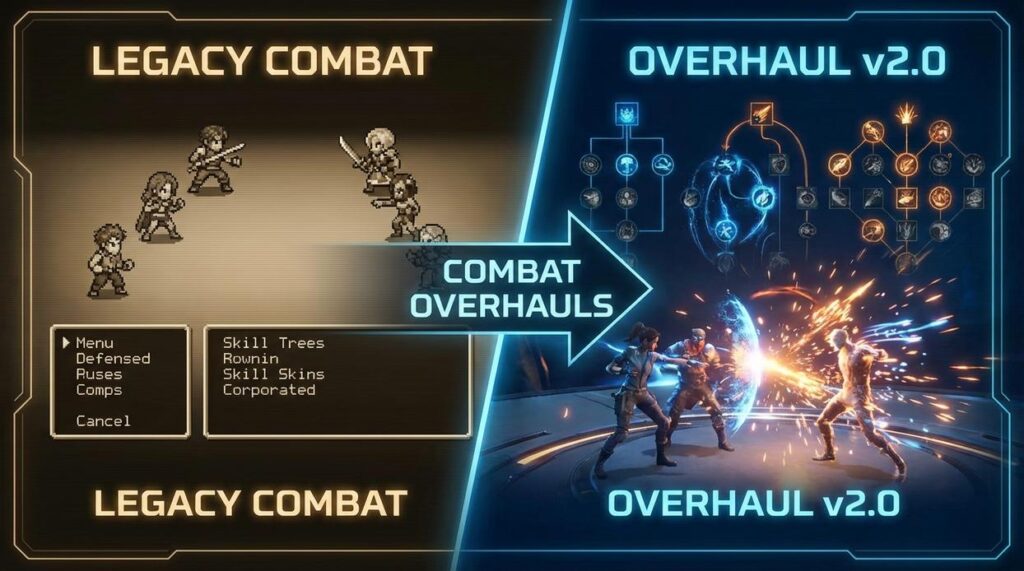
Shock-Level Systems: Analyzing Major Combat Mechanic Overhauls

When players talk about “balance changes,” they usually mean numbers—damage up 5%, cooldown down 2 seconds. But shock-level systems are different. These are systemic changes, meaning they alter the core gameplay loop—the repeating cycle of actions players perform to win (attack, defend, heal, reposition, repeat). Instead of tweaking outputs, they redefine the rules.
For example, consider armor systems. In a flat damage reduction model, armor subtracts a fixed amount from incoming damage. In a health-gating system, however, a character cannot be eliminated in a single hit if above a threshold. That shift doesn’t just change survivability—it changes risk-taking. Suddenly, aggressive plays become safer, and burst damage loses some of its terror factor.
Some argue these overhauls create unnecessary chaos. Why not just fine-tune numbers? After all, sweeping changes can frustrate competitive players. That’s fair. However, incremental tweaks can’t fix structural imbalances. If healing is too dominant, lowering healing by 3% rarely solves the problem. A global healing reduction, on the other hand, forces a complete meta shift analysis.
Here’s the ripple effect: when healing drops across the board, burst-damage characters become exponentially more valuable—even if their stats remain untouched. Movement abilities introduced universally also reshape spacing, objective control, and timing windows (think of it like adding double-jump to every character—suddenly the map feels smaller).
In short, systemic metadata changes demand total strategic reevaluation. They’re not patches. They’re paradigm resets.
The Community Echo: How Player Data Becomes the New Metadata
In modern multiplayer games, player behavior functions as a living data layer. Pick rates (how often a character or loadout is selected), win rates (the percentage of matches won), and kill/death ratios (eliminations divided by deaths) form what’s often called community-driven metadata. In other words, the community itself becomes the analytics engine. When a sniper loadout suddenly jumps in usage after a tournament, that’s not random—it’s signal.
Some argue this data is overrated. After all, numbers don’t capture context, team coordination, or raw mechanical skill. A high win rate could simply reflect elite players favoring a niche character. That’s fair. However, when thousands—or millions—of matches point in the same direction, patterns become difficult to dismiss (numbers may not tell the whole story, but they rarely lie outright).
This creates a feedback loop. Developers monitor:
- Low pick rate + high win rate → likely high skill ceiling.
- High pick rate + high win rate → potential imbalance.
- High pick rate + low win rate → popularity without power.
Through meta shift analysis, studios translate these signals into balance patches. Think of it like patch notes responding to a season-long stress test.
So where do you find this data? Third-party API sites, ranked leaderboards, and community trackers aggregate match statistics in near real time. Consequently, attentive players can spot rising trends before they dominate ranked queues. Pro tip: watch week-over-week movement, not just raw numbers.
Granted, chasing every fluctuation can feel like following fashion trends (remember when everyone copied that one overpowered arena build?). Still, informed interpretation turns raw stats into competitive advantage.
Dominate the Arena Now
You came here to sharpen your edge — to understand the mechanics, master multiplayer arena tactics, and stay ahead of constant balance changes. Now you have the clarity to read combat systems faster, react smarter, and adapt through meta shift analysis instead of falling behind it.
The real frustration isn’t losing — it’s losing because you didn’t have the right insight at the right time. Getting outplayed by players who understand shock-level combat timing, controller optimization, and positioning better than you do. That gap is what separates average players from dominant ones.
Now it’s your move.
Apply these tactics in your next matches. Refine your loadouts. Optimize your controller settings. Study the evolving meta and adjust before your opponents do.
Thousands of competitive players rely on these proven strategies to level up faster and win more consistently. If you’re serious about climbing ranks and controlling the arena instead of reacting to it, start implementing these insights today and turn every match into your advantage.